

Индекс
-
ChatService(интерфейс) -
AccessoryWidget(message) -
ActionResponse(сообщение) -
ActionResponse.ResponseType(enum) -
ActionResponse.SelectionItems(message) -
ActionResponse.UpdatedWidget(message) -
ActionStatus(message) -
Annotation(сообщение) -
AnnotationType(enum) -
AppCommandMetadata(message) -
AppCommandMetadata.AppCommandType(enum) -
AttachedGif(сообщение) -
Attachment(сообщение) -
Attachment.Source(enum) -
AttachmentDataRef(message) -
CalendarEventLinkData(message) -
CardWithId(message) -
ChatSpaceLinkData(сообщение) -
CompleteImportSpaceRequest(message) -
CompleteImportSpaceResponse(message) -
ContextualAddOnMarkup(message) -
ContextualAddOnMarkup.Card(message) -
ContextualAddOnMarkup.Card.CardAction(message) -
ContextualAddOnMarkup.Card.CardHeader(message) -
ContextualAddOnMarkup.Card.CardHeader.ImageStyle(enum) -
ContextualAddOnMarkup.Card.Section(message) -
CreateCustomEmojiRequest(message) -
CreateMembershipRequest(message) -
CreateMessageRequest(message) -
CreateMessageRequest.MessageReplyOption(enum) -
CreateReactionRequest(message) -
CreateSectionRequest(message) -
CreateSpaceRequest(message) -
CustomEmoji(сообщение) -
CustomEmoji.CustomEmojiPayload(message) -
CustomEmojiMetadata(message) -
DeleteCustomEmojiRequest(message) -
DeleteMembershipRequest(message) -
DeleteMessageRequest(message) -
DeleteReactionRequest(message) -
DeleteSectionRequest(message) -
DeleteSpaceRequest(message) -
DeletionMetadata(message) -
DeletionMetadata.DeletionType(enum) -
Dialog(сообщение) -
DialogAction(message) -
DriveDataRef(message) -
DriveLinkData(сообщение) -
Emoji(сообщение) -
EmojiReactionSummary(message) -
FindDirectMessageRequest(message) -
FindGroupChatsRequest(message) -
FindGroupChatsResponse(message) -
GetAttachmentRequest(message) -
GetCustomEmojiRequest(message) -
GetMembershipRequest(message) -
GetMessageRequest(message) -
GetSpaceEventRequest(message) -
GetSpaceNotificationSettingRequest(message) -
GetSpaceReadStateRequest(message) -
GetSpaceRequest(message) -
GetThreadReadStateRequest(message) -
Group(сообщение) -
HistoryState(enum) -
ListCustomEmojisRequest(message) -
ListCustomEmojisResponse(message) -
ListMembershipsRequest(message) -
ListMembershipsResponse(message) -
ListMessagesRequest(message) -
ListMessagesResponse(message) -
ListReactionsRequest(message) -
ListReactionsResponse(message) -
ListSectionItemsRequest(message) -
ListSectionItemsResponse(message) -
ListSectionsRequest(message) -
ListSectionsResponse(message) -
ListSpaceEventsRequest(message) -
ListSpaceEventsResponse(message) -
ListSpacesRequest(message) -
ListSpacesResponse(message) -
MatchedUrl(message) -
MeetSpaceLinkData(сообщение) -
MeetSpaceLinkData.HuddleStatus(enum) -
MeetSpaceLinkData.Type(enum) -
Membership(сообщение) -
Membership.MembershipRole(enum) -
Membership.MembershipState(enum) -
MembershipBatchCreatedEventData(message) -
MembershipBatchDeletedEventData(message) -
MembershipBatchUpdatedEventData(message) -
MembershipCreatedEventData(message) -
MembershipDeletedEventData(message) -
MembershipUpdatedEventData(message) -
Message(message) -
MessageBatchCreatedEventData(message) -
MessageBatchDeletedEventData(message) -
MessageBatchUpdatedEventData(message) -
MessageCreatedEventData(message) -
MessageDeletedEventData(message) -
MessageUpdatedEventData(message) -
MoveSectionItemRequest(message) -
MoveSectionItemResponse(message) -
PositionSectionRequest(message) -
PositionSectionRequest.Position(enum) -
PositionSectionResponse(message) -
QuotedMessageMetadata(message) -
Reaction(сообщение) -
ReactionBatchCreatedEventData(message) -
ReactionBatchDeletedEventData(message) -
ReactionCreatedEventData(message) -
ReactionDeletedEventData(message) -
RichLinkMetadata(message) -
RichLinkMetadata.RichLinkType(enum) -
SearchSpacesRequest(message) -
SearchSpacesResponse(message) -
Section(сообщение) -
Section.SectionType(enum) -
SectionItem(message) -
SetUpSpaceRequest(message) -
SlashCommand(message) -
SlashCommandMetadata(сообщение) -
SlashCommandMetadata.Type(перечисление) -
Space(сообщение) -
Space.AccessSettings(message) -
Space.AccessSettings.AccessState(enum) -
Space.MembershipCount(message) -
Space.PermissionSetting(message) -
Space.PermissionSettings(message) -
Space.PredefinedPermissionSettings(enum) -
Space.SpaceDetails(message) -
Space.SpaceThreadingState(enum) -
Space.SpaceType(enum) -
Space.Type(enum) -
SpaceBatchUpdatedEventData(message) -
SpaceEvent(сообщение) -
SpaceNotificationSetting(message) -
SpaceNotificationSetting.MuteSetting(enum) -
SpaceNotificationSetting.NotificationSetting(enum) -
SpaceReadState(message) -
SpaceUpdatedEventData(message) -
SpaceView(enum) -
Thread(сообщение) -
ThreadReadState(message) -
UpdateMembershipRequest(message) -
UpdateMessageRequest(message) -
UpdateSectionRequest(message) -
UpdateSpaceNotificationSettingRequest(message) -
UpdateSpaceReadStateRequest(message) -
UpdateSpaceRequest(message) -
User(сообщение) -
User.Type(enum) -
UserMentionMetadata(message) -
UserMentionMetadata.Type(enum) -
WidgetMarkup(message) -
WidgetMarkup.Button(message) -
WidgetMarkup.FormAction(message) -
WidgetMarkup.FormAction.ActionParameter(message) -
WidgetMarkup.Icon(enum) -
WidgetMarkup.Image(message) -
WidgetMarkup.ImageButton(message) -
WidgetMarkup.KeyValue(message) -
WidgetMarkup.OnClick(message) -
WidgetMarkup.OpenLink(сообщение) -
WidgetMarkup.TextButton(message) -
WidgetMarkup.TextParagraph(сообщение)
Сервис чата
Позволяет разработчикам создавать приложения для чата и интеграции на платформе Google Chat.
| CompleteImportSpace |
|---|
Завершает процесс импорта указанного пространства и делает его видимым для пользователей. Требуется аутентификация пользователя и делегирование полномочий в масштабе всего домена с указанием области авторизации :
Для получения дополнительной информации см. раздел «Разрешить приложениям Google Chat импортировать данные» .
|
| Создать пользовательские эмодзи |
|---|
Создаёт пользовательский эмодзи. Пользовательские эмодзи доступны только для учетных записей Google Workspace, и администратор должен включить их использование для всей организации. Для получения дополнительной информации см. разделы « Узнайте больше о пользовательских эмодзи в Google Chat» и «Управление разрешениями на использование пользовательских эмодзи» . Требуется аутентификация пользователя с указанием области авторизации :
|
| Создать членство |
|---|
Создает членство для вызывающего чат-приложения, пользователя или группы Google. Создание членств для других чат-приложений не поддерживается. При создании членства, если у указанного участника отключена политика автоматического принятия приглашений, он получает приглашение и должен принять приглашение в пространство, прежде чем присоединиться. В противном случае, создание членства добавляет участника непосредственно в указанное пространство. Поддерживаются следующие типы аутентификации :
Аутентификация приложений не поддерживается в следующих случаях:
Примеры использования см. в:
|
| Создать сообщение |
|---|
Создает сообщение в чате Google. Пример см. в разделе «Отправка сообщения» . Поддерживаются следующие типы аутентификации :
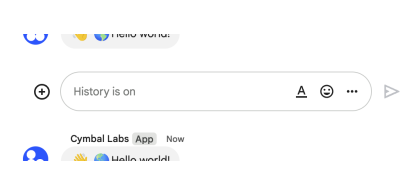
В зависимости от типа аутентификации, используемого в запросе, чат по-разному определяет отправителя сообщения. На следующем изображении показано, как Chat присваивает сообщениям атрибуты при использовании аутентификации приложения. Chat отображает приложение Chat в качестве отправителя сообщения. Содержимое сообщения может включать текст (
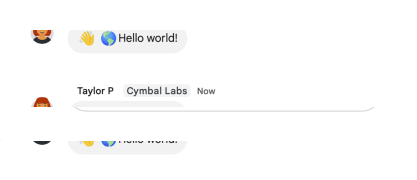
На следующем изображении показано, как Chat присваивает сообщениям атрибуты при использовании аутентификации пользователя. Chat отображает пользователя как отправителя сообщения и присваивает сообщению имя приложения Chat. Содержимое сообщения может содержать только текст (
Максимальный размер сообщения, включая его содержимое, составляет 32 000 байт. В случае запросов через веб-перехватчик ответ не содержит полного сообщения. В ответ, помимо информации, содержащейся в запросе, заполняются только поля
|
| Создать реакцию |
|---|
Создает реакцию и добавляет ее к сообщению. Пример см. в разделе «Добавление реакции к сообщению» . Требуется аутентификация пользователя с использованием одной из следующих областей авторизации :
|
| СоздатьСекцию |
|---|
Создает раздел в Google Chat. Разделы помогают пользователям группировать беседы и настраивать список разделов, отображаемых на панели навигации чата. Можно создавать только разделы типа Требуется аутентификация пользователя с указанием области авторизации :
|
| CreateSpace |
|---|
Создает пространство. Может использоваться для создания именованного пространства или группового чата в Поддерживаются следующие типы аутентификации :
При аутентификации в качестве приложения поле При аутентификации в качестве приложения приложение «Чат» добавляется в качестве участника пространства. Однако, в отличие от аутентификации человека, приложение «Чат» не добавляется в качестве менеджера пространства. По умолчанию приложение «Чат» может быть удалено из пространства всеми участниками пространства. Чтобы разрешить удаление приложения из пространства только менеджерам пространства, установите Состав участников пространства при его создании зависит от того, создано ли пространство в
Если при создании пространства вы получаете сообщение об ошибке
|
| DeleteCustomEmoji |
|---|
Удаляет созданный пользователем эмодзи. По умолчанию пользователи могут удалять только созданные ими самими эмодзи. Менеджеры эмодзи , назначенные администратором, могут удалять любые созданные ими эмодзи в организации. См. раздел «Подробнее о созданных пользователем эмодзи в Google Chat» . Пользовательские эмодзи доступны только для учетных записей Google Workspace, и администратор должен включить их использование для всей организации. Для получения дополнительной информации см. разделы « Узнайте больше о пользовательских эмодзи в Google Chat» и «Управление разрешениями на использование пользовательских эмодзи» . Требуется аутентификация пользователя с указанием области авторизации :
|
| Удалить членство |
|---|
Удаляет членство. Пример см. в разделе «Удаление пользователя или приложения Google Chat из пространства» . Поддерживаются следующие типы аутентификации :
Аутентификация приложений не поддерживается в следующих случаях:
Для удаления членства для администраторов пространства запрашивающий должен быть администратором пространства. Если вы используете аутентификацию через приложение, то приложение «Чат» должно быть создано пользователем пространства.
|
| Удалить сообщение |
|---|
Удаляет сообщение. Пример см. в разделе «Удаление сообщения» . Поддерживаются следующие типы аутентификации :
При использовании аутентификации приложения запросы могут удалять только сообщения, созданные вызывающим приложением чата.
|
| DeleteReaction |
|---|
Удаляет реакцию на сообщение. Пример см. в разделе «Удаление реакции» . Требуется аутентификация пользователя с использованием одной из следующих областей авторизации :
|
| Удалить раздел |
|---|
Удаляет раздел типа Если раздел содержит такие элементы, как пробелы, эти элементы перемещаются в стандартные разделы Google Chat и не удаляются. Подробнее см. раздел «Создание и организация разделов в Google Chat» . Требуется аутентификация пользователя с указанием области авторизации :
|
| DeleteSpace |
|---|
Удаляет именованное пространство. Всегда выполняет каскадное удаление, что означает, что дочерние ресурсы пространства — такие как сообщения, опубликованные в пространстве, и членство в пространстве — также удаляются. Пример см. в разделе «Удаление пространства» . Поддерживаются следующие типы аутентификации :
|
| FindDirectMessage |
|---|
Возвращает существующее личное сообщение с указанным пользователем. Если место для личных сообщений не найдено, возвращает ошибку При использовании аутентификации приложения возвращается пространство для прямых сообщений между указанным пользователем и вызывающим приложением чата. При наличии аутентификации пользователя возвращается пространство прямых сообщений между указанным пользователем и аутентифицированным пользователем. Поддерживаются следующие типы аутентификации :
|
| FindGroupChats |
|---|
Возвращает все пространства с Если вызывающий пользователь блокирует или сам блокируется некоторыми пользователями, и не найдено ни одного пространства, содержащего весь указанный набор пользователей, этот метод возвращает пространства, которые не включают заблокированных или блокирующих пользователей. Указанный набор пользователей должен содержать только данные о пользователях-людях (не приложениях). Запрос, содержащий данные о пользователях-нелюдях, не возвращает никаких пробелов. Требуется аутентификация пользователя с использованием одной из следующих областей авторизации :
|
| Получить вложение |
|---|
Получает метаданные вложения сообщения. Данные вложения извлекаются с помощью API мультимедиа . Пример см. в разделе «Получение метаданных о вложении сообщения» . Требуется аутентификация приложения с указанием области авторизации :
|
| GetCustomEmoji |
|---|
Возвращает подробную информацию о пользовательском эмодзи. Пользовательские эмодзи доступны только для учетных записей Google Workspace, и администратор должен включить их использование для всей организации. Для получения дополнительной информации см. разделы « Узнайте больше о пользовательских эмодзи в Google Chat» и «Управление разрешениями на использование пользовательских эмодзи» . Требуется аутентификация пользователя с использованием одной из следующих областей авторизации :
|
| GetMembership |
|---|
Возвращает подробную информацию о членстве. Пример см. в разделе «Получение подробной информации о членстве пользователя или приложения Google Chat» . Поддерживаются следующие типы аутентификации :
|
| GetMessage |
|---|
Возвращает подробную информацию о сообщении. Пример см. в разделе «Получение подробной информации о сообщении» . Поддерживаются следующие типы аутентификации :
Примечание: Возможно, ответ будет получен от заблокированного пользователя или сообщества.
|
| GetSpace |
|---|
Возвращает подробную информацию о пространстве. Пример см. в разделе «Получение подробной информации о пространстве» . Поддерживаются следующие типы аутентификации :
Аутентификация приложений имеет следующие ограничения:
|
| GetSpaceEvent |
|---|
Возвращает событие из пространства Google Чата. Полезная нагрузка события содержит самую последнюю версию ресурса, которая изменилась. Например, если вы запрашиваете событие о новом сообщении, но сообщение позже было обновлено, сервер возвращает обновленный ресурс Примечание: Поле Поддерживаются следующие типы аутентификации с областью авторизации , соответствующей чтению запрашиваемых данных:
Для подключения к мероприятию авторизованный абонент должен быть членом данного пространства. В качестве примера см. раздел «Получение подробной информации о событии из пространства Google Chat» .
|
| GetSpaceNotificationSetting |
|---|
Получает настройки уведомлений о наличии свободного места. Пример см. в разделе «Получение настроек уведомлений о наличии свободного места для вызывающего абонента» . Требуется аутентификация пользователя с указанием области авторизации :
|
| GetSpaceReadState |
|---|
Возвращает подробную информацию о состоянии чтения пользователя в пространстве, используемую для идентификации прочитанных и непрочитанных сообщений. Пример см. в разделе «Получение подробной информации о состоянии чтения пользователя в пространстве» . Требуется аутентификация пользователя с использованием одной из следующих областей авторизации :
|
| GetThreadReadState |
|---|
Возвращает подробную информацию о состоянии чтения пользователя в потоке, используемую для идентификации прочитанных и непрочитанных сообщений. Пример см. в разделе «Получение подробной информации о состоянии чтения пользователя в потоке» . Требуется аутентификация пользователя с использованием одной из следующих областей авторизации :
|
| ListCustomEmojis |
|---|
Отображает список пользовательских эмодзи, видимых авторизованному пользователю. Пользовательские эмодзи доступны только для учетных записей Google Workspace, и администратор должен включить их использование для всей организации. Для получения дополнительной информации см. разделы « Узнайте больше о пользовательских эмодзи в Google Chat» и «Управление разрешениями на использование пользовательских эмодзи» . Требуется аутентификация пользователя с использованием одной из следующих областей авторизации :
|
| ListMemberships |
|---|
Отображает список участников в пространстве. Например, см. раздел «Список пользователей и приложений Google Chat в пространстве» . Отображение списка участников с аутентификацией приложения отображает участников в пространствах, к которым имеет доступ приложение Chat, но исключает участников самого приложения Chat, включая его собственное. Отображение списка участников с аутентификацией пользователя отображает участников в пространствах, к которым имеет доступ авторизованный пользователь. Поддерживаются следующие типы аутентификации :
|
| ListMessages |
|---|
Выводит список сообщений в пространстве, членом которого является вызывающий абонент, включая сообщения от заблокированных участников и пространств. Системные сообщения, например, сообщения о новых участниках пространства, не включаются. Если вы выводите список сообщений из пространства, в котором нет сообщений, ответ будет пустым объектом. При использовании интерфейса REST/HTTP ответ содержит пустой JSON-объект Поддерживаются следующие типы аутентификации :
|
| ListReactions |
|---|
Выводит список реакций на сообщение. Пример см. в разделе «Список реакций на сообщение» . Требуется аутентификация пользователя с использованием одной из следующих областей авторизации :
|
| ListSectionItems |
|---|
Отображает список товаров в разделе. В настоящее время только пробелы могут быть элементами раздела. Подробнее см. раздел «Создание и организация разделов в Google Chat» . Требуется аутентификация пользователя с указанием области авторизации :
|
| ListSections |
|---|
Список разделов, доступных пользователю чата. Разделы помогают пользователям группировать свои беседы и настраивать список разделов, отображаемых на панели навигации чата. Подробнее см. раздел «Создание и организация разделов в Google Chat» . Требуется аутентификация пользователя с указанием области авторизации :
|
| ListSpaceEvents |
|---|
Отображает список событий из пространства Google Chat. Для каждого события полезная нагрузка содержит самую последнюю версию ресурса Chat. Например, если вы перечисляете события о новых участниках пространства, сервер возвращает ресурсы Поддерживаются следующие типы аутентификации с областью авторизации , соответствующей чтению запрашиваемых данных:
Для отображения списка событий авторизованный звонящий должен быть членом данного пространства. В качестве примера см. раздел «Список событий из пространства Google Chat» .
|
| ListSpaces |
|---|
Отображает список сообществ, в которых состоит звонящий. Групповые чаты и личные сообщения отображаются только после отправки первого сообщения. Пример см. в разделе «Список сообществ» . Поддерживаются следующие типы аутентификации :
Чтобы получить список всех именованных пространств по организации Google Workspace, используйте метод
|
| Переместить элемент секции |
|---|
Перемещает элемент из одного раздела в другой. Например, если раздел содержит пробелы, этот метод можно использовать для перемещения пробела в другой раздел. Подробнее см. раздел «Создание и организация разделов в Google Chat» . Требуется аутентификация пользователя с указанием области авторизации :
|
| Раздел позиции |
|---|
Изменяет порядок сортировки раздела. Подробнее см. раздел «Создание и организация разделов в Google Chat» . Требуется аутентификация пользователя с указанием области авторизации :
|
| SearchSpaces |
|---|
Возвращает список пространств в организации Google Workspace на основе поиска администратора. В запросе установите Требуется аутентификация пользователя с правами администратора и одной из следующих областей авторизации :
|
| SetUpSpace |
|---|
Создает пространство и добавляет в него указанных пользователей. Вызывающий пользователь автоматически добавляется в пространство и не должен указываться в запросе как член группы. Пример см. в разделе «Настройка пространства с первоначальным составом участников» . Чтобы указать, каких пользователей следует добавить, добавьте членство с соответствующим параметром Чтобы указать группы Google для добавления, добавьте участников с соответствующим параметром В случае именованного пространства или группового чата, если звонящий блокирует или блокируется некоторыми участниками, или не имеет разрешения на добавление некоторых участников, то эти участники не добавляются в созданное пространство. Для создания личного сообщения (ЛС) между вызывающим пользователем и другим пользователем необходимо указать ровно одно членство, представляющее этого пользователя. Если один пользователь блокирует другого, запрос не выполняется, и ЛС не создается. Чтобы создать личное сообщение между вызывающим пользователем и вызывающим приложением, установите Если между двумя пользователями уже существует личное сообщение, даже если один пользователь блокирует другого в момент отправки запроса, то возвращается существующее личное сообщение. Пространства с цепочками ответов не поддерживаются. Если при настройке пространства вы получаете сообщение об ошибке Требуется аутентификация пользователя с использованием одной из следующих областей авторизации :
|
| Обновить членство |
|---|
Обновляет данные о членстве. Пример см. в разделе «Обновление данных пользователя в пространстве» . Поддерживаются следующие типы аутентификации :
|
| Обновление сообщения |
|---|
Обновляет сообщение. Существует разница между методами Поддерживаются следующие типы аутентификации :
При использовании аутентификации приложения запросы могут обновлять только сообщения, созданные вызывающим приложением чата.
|
| UpdateSection |
|---|
Обновляет раздел. Обновлять можно только разделы типа Требуется аутентификация пользователя с указанием области авторизации :
|
| ОбновлениеПространства |
|---|
Обновляет пространство. Пример см. в разделе «Обновление пространства» . Если при обновлении поля Поддерживаются следующие типы аутентификации :
Аутентификация приложений имеет следующие ограничения:
|
| UpdateSpaceNotificationSetting |
|---|
Обновляет настройку уведомлений о свободном доступе. Пример см. в разделе «Обновление настройки уведомлений о свободном доступе для вызывающего абонента» . Требуется аутентификация пользователя с указанием области авторизации :
|
| UpdateSpaceReadState |
|---|
Обновляет состояние чтения пользователя в пространстве, используется для идентификации прочитанных и непрочитанных сообщений. Пример см. в разделе «Обновление состояния чтения пространства пользователя» . Требуется аутентификация пользователя с указанием области авторизации :
|
AccessoryWidget
Один или несколько интерактивных виджетов, которые отображаются внизу сообщения. Подробнее см. раздел «Добавление интерактивных виджетов внизу сообщения» .
| Поля | |
|---|---|
Полевые action профсоюза. Тип действия. action может быть только одним из следующих: | |
button_list | Список кнопок. |
ДействиеОтвет
Параметры, которые приложение чата может использовать для настройки способа отправки ответа.
| Поля | |
|---|---|
type | Только ввод. Тип ответа приложения для чата. |
url | Только для ввода. URL-адрес для аутентификации или настройки пользователей. (Только для типов ответов |
dialog_action | Только ввод. Ответ на событие взаимодействия, связанное с диалогом . Должен сопровождаться |
updated_widget | Только ввод данных. Ответ обновленного виджета. |
Тип ответа
Тип ответа приложения для чата.
| Перечисления | |
|---|---|
TYPE_UNSPECIFIED | Тип по умолчанию, обрабатываемый как NEW_MESSAGE . |
NEW_MESSAGE | Опубликовать как новое сообщение в этой теме. |
UPDATE_MESSAGE | Обновить сообщение в чате. Это разрешено только при событии CARD_CLICKED , где тип отправителя сообщения — BOT . |
UPDATE_USER_MESSAGE_CARDS | Обновить карточки в сообщении пользователя. Это разрешено только в ответ на событие MESSAGE с соответствующим URL-адресом или событие CARD_CLICKED , где тип отправителя сообщения — HUMAN . Текст игнорируется. |
REQUEST_CONFIG | Запросить у пользователя дополнительную аутентификацию или настройку в частном порядке. |
DIALOG | Представляет диалог . |
UPDATE_WIDGET | Варианты автозаполнения текста виджета. |
Элементы выбора
Список результатов автозаполнения виджета.
| Поля | |
|---|---|
items[] | Массив объектов SelectionItem. |
Обновленный виджет
Для виджетов selectionInput возвращаются подсказки автозаполнения для меню с множественным выбором.
| Поля | |
|---|---|
widget | Идентификатор обновляемого виджета. Идентификатор должен совпадать с идентификатором виджета, который инициировал запрос на обновление. |
Поле объединения updated_widget . Виджет обновляется в ответ на действие пользователя. updated_widget может принимать только одно из следующих значений: | |
suggestions | Список результатов автозаполнения виджета |
ActionStatus
Отображает статус запроса на запуск или отправку диалога .
| Поля | |
|---|---|
status_code | Код состояния. |
user_facing_message | Сообщение, которое необходимо отправить пользователям о статусе их запроса. Если параметр не задан, отправляется стандартное сообщение, основанное на |
Аннотация
Только для вывода. Аннотации могут быть связаны с текстовым телом сообщения или с фрагментами, которые ссылаются на ресурсы Google Workspace, такие как Google Docs или Google Sheets, с start_index и length 0. Чтобы добавить базовое форматирование к текстовому сообщению, см. раздел «Форматирование текстовых сообщений» .
Пример текста сообщения в открытом виде:
Hello @FooBot how are you!"
Соответствующие метаданные аннотаций:
"annotations":[{
  "type":"USER_MENTION",
  "startIndex":6,
  "length":7,
  "userMention": {
    "user": {
      "name":"users/{user}",
      "displayName":"FooBot",
      "avatarUrl":"https://goo.gl/aeDtrS",
      "type":"BOT"
    },
    "type":"MENTION"
   }
}]
| Поля | |
|---|---|
type | Тип данной аннотации. |
length | Длина подстроки в текстовом теле сообщения, которой соответствует эта аннотация. Если отсутствует, указывается длина 0. |
start_index | Эта аннотация соответствует начальному индексу (начиная с 0 включительно) в текстовом теле сообщения. |
metadata поля объединения. Дополнительные метаданные об аннотации. metadata могут быть только одним из следующих типов: | |
user_mention | Метаданные упоминания пользователя. |
slash_command | Метаданные для команды с косой чертой. |
rich_link_metadata | Метаданные для расширенной ссылки. |
custom_emoji_metadata | Метаданные для пользовательского эмодзи. |
AnnotationType
Тип аннотации.
| Перечисления | |
|---|---|
ANNOTATION_TYPE_UNSPECIFIED | Значение по умолчанию для перечисления. Не использовать. |
USER_MENTION | Упоминается пользователь. |
SLASH_COMMAND | Выполняется команда с косой чертой. |
RICH_LINK | Расширенная аннотация ссылок. |
CUSTOM_EMOJI | Пользовательская аннотация в виде эмодзи. |
AppCommandMetadata
Метаданные о команде приложения чата .
| Поля | |
|---|---|
app_command_id | Идентификатор команды, указанной в конфигурации API чата. |
app_command_type | Тип команды приложения «Чат». |
AppCommandType
Тип команды приложения «Чат». Подробнее см. раздел «Типы команд приложения «Чат»» .
| Перечисления | |
|---|---|
APP_COMMAND_TYPE_UNSPECIFIED | Значение по умолчанию. Не указано. |
SLASH_COMMAND | Команда, состоящая из двух символов (слэша). Пользователь отправляет команду в сообщении чата. |
QUICK_COMMAND | Быстрая команда. Пользователь выбирает команду из меню чата в области ответа на сообщение. |
AttachedGif
GIF-изображение, заданное URL-адресом.
| Поля | |
|---|---|
uri | Только вывод. URL-адрес, на котором размещено GIF-изображение. |
Вложение
Вложение в Google Чате.
| Поля | |
|---|---|
name | Идентификатор. Имя ресурса вложения. Формат: |
content_name | Только вывод. Исходное имя файла с содержимым, а не полный путь. |
content_type | Только вывод. Тип содержимого (MIME-тип) файла. |
thumbnail_uri | Только для вывода. URL-адрес миниатюры, который следует использовать для предварительного просмотра вложения пользователем. Приложения для чата не должны использовать этот URL-адрес для загрузки содержимого вложений. |
download_uri | Только для вывода. URL-адрес для скачивания, который должен использоваться для того, чтобы пользователь мог загрузить вложение. Приложения для чата не должны использовать этот URL-адрес для загрузки содержимого вложений. |
source | Только вывод. Источник вложения. |
Поле объединения data_ref . Ссылка на данные вложения. data_ref может принимать только одно из следующих значений: | |
attachment_data_ref | Необязательно. Ссылка на данные вложений. Это поле используется для создания или обновления сообщений с вложениями, либо для загрузки данных вложений через API мультимедиа. |
drive_data_ref | Только для вывода. Ссылка на вложение в Google Диск. Это поле используется с API Google Диска. |
Источник
Источник вложения.
| Перечисления | |
|---|---|
SOURCE_UNSPECIFIED | Сдержанный. |
DRIVE_FILE | Это файл из Google Диска. |
UPLOADED_CONTENT | Файл загружен в чат. |
AttachmentDataRef
Ссылка на прикрепленные данные.
| Поля | |
|---|---|
resource_name | Необязательно. Имя ресурса данных вложения. Это поле используется с API для работы с медиафайлами для загрузки данных вложения. |
attachment_upload_token | Необязательный параметр. Непрозрачный токен, содержащий ссылку на загруженное вложение. Клиенты обрабатывают его как непрозрачную строку и используют для создания или обновления сообщений чата с вложениями. |
CalendarEventLinkData
Данные для ссылок на события календаря.
| Поля | |
|---|---|
calendar_id | Идентификатор календаря , к которому ведет ссылка. |
event_id | Идентификатор события связанного события календаря. |
CardWithId
Карточка в сообщении Google Chat.
Карточки могут создавать только приложения для чата. Если ваше приложение для чата авторизуется как пользователь , сообщение не может содержать карточки.
Создавайте и просматривайте карточки с помощью конструктора карточек.
Откройте конструктор карточек.| Поля | |
|---|---|
card_id | Обязательно, если сообщение содержит несколько карточек. Уникальный идентификатор для карточки в сообщении. |
card | Карта памяти. Максимальный размер — 32 КБ. |
ChatSpaceLinkData
Данные для ссылок в чате.
| Поля | |
|---|---|
space | Пространство связанного ресурса чата. Формат: |
thread | Обсуждение в связанном чате. Формат: |
message | Сообщение, содержащееся в связанном ресурсе чата. Формат: |
CompleteImportSpaceRequest
Запрос на отправку сообщения для завершения процесса импорта пространства.
| Поля | |
|---|---|
name | Обязательно. Имя ресурса пространства режима импорта. Формат: |
CompleteImportSpaceResponse
Сообщение об успешном завершении процесса импорта пространства.
| Поля | |
|---|---|
space | Пространство режимов импорта. |
ContextualAddOnMarkup
Этот тип не содержит полей.
Разметка, позволяющая разработчикам указывать содержимое контекстного дополнения.
Карта
Карточка — это элемент пользовательского интерфейса, который может содержать виджеты пользовательского интерфейса, такие как текст и изображения.
| Поля | |
|---|---|
header | Заголовок карточки. Заголовок обычно содержит название и изображение. |
sections[] | Разделы обозначены разделительной линией. |
card_actions[] | Действия этой карты. |
name | Название карты. |
CardAction
Действие, выполняемое с помощью карты, — это действие, связанное с данной картой. Для карты счета-фактуры типичным действием может быть: удалить счет-фактуру, отправить счет-фактуру по электронной почте или открыть счет-фактуру в браузере.
Не поддерживается приложениями Google Chat.
| Поля | |
|---|---|
action_label | Ранее эта метка отображалась в пункте меню действий. |
on_click | Действие по клику для этого элемента действия. |
CardHeader
| Поля | |
|---|---|
title | Необходимо указать заголовок. Высота верхнего колонтитула фиксирована: если указаны и заголовок, и подзаголовок, каждый занимает одну строку. Если указан только заголовок, он занимает обе строки. |
subtitle | Подзаголовок заголовка карточки. |
image_style | Тип изображения (например, квадратная или круглая рамка). |
image_url | URL изображения в заголовке карточки. |
ImageStyle
| Перечисления | |
|---|---|
IMAGE_STYLE_UNSPECIFIED | |
IMAGE | Квадратная рамка. |
AVATAR | Круглая граница. |
Раздел
Раздел содержит набор виджетов, которые отображаются (вертикально) в том порядке, в котором они указаны. На всех платформах карточки имеют узкую фиксированную ширину, поэтому в настоящее время нет необходимости в свойствах компоновки (например, float).
| Поля | |
|---|---|
header | Заголовок раздела. Поддерживается форматированный текст. Для получения дополнительной информации о форматировании текста см. разделы «Форматирование текста в приложениях Google Chat» и «Форматирование текста в надстройках Google Workspace». |
widgets[] | Раздел должен содержать как минимум один виджет. |
CreateCustomEmojiRequest
A request to create a custom emoji.
| Fields | |
|---|---|
custom_emoji | Required. The custom emoji to create. |
CreateMembershipRequest
Request message for creating a membership.
| Fields | |
|---|---|
parent | Required. The resource name of the space for which to create the membership. Format: spaces/{space} |
membership | Required. The membership relation to create. The When a Chat app creates a membership relation for a human user, it must use certain authorization scopes and set specific values for certain fields:
Inviting users external to the Workspace organization that owns the space requires user authentication . When a Chat app creates a membership relation for itself, it must authenticate as a user and use the |
use_admin_access | Optional. When The calling user must be a Google Workspace administrator with the manage chat and spaces conversations privilege . Requires the Creating app memberships or creating memberships for users outside the administrator's Google Workspace organization isn't supported using admin access. |
CreateMessageRequest
Creates a message.
| Fields | |
|---|---|
parent | Required. The resource name of the space in which to create a message. Format: |
message | Required. Message body. |
thread_key | Optional. Deprecated: Use |
request_id | Optional. A unique request ID for this message. Specifying an existing request ID returns the message created with that ID instead of creating a new message. |
message_reply_option | Optional. Specifies whether a message starts a thread or replies to one. Only supported in named spaces. When responding to user interactions , this field is ignored. For interactions within a thread, the reply is created in the same thread. Otherwise, the reply is created as a new thread. |
message_id | Optional. A custom ID for a message. Lets Chat apps get, update, or delete a message without needing to store the system-assigned ID in the message's resource name (represented in the message The value for this field must meet the following requirements:
For details, see Name a message . |
MessageReplyOption
Specifies how to reply to a message. More states might be added in the future.
| Перечисления | |
|---|---|
MESSAGE_REPLY_OPTION_UNSPECIFIED | Default. Starts a new thread. Using this option ignores any thread ID or |
REPLY_MESSAGE_FALLBACK_TO_NEW_THREAD | Creates the message as a reply to the thread specified by thread ID or |
REPLY_MESSAGE_OR_FAIL | Creates the message as a reply to the thread specified by thread ID or thread_key is used, a new thread is created. If the message creation fails, a NOT_FOUND error is returned instead. |
CreateReactionRequest
Creates a reaction to a message.
| Fields | |
|---|---|
parent | Required. The message where the reaction is created. Format: |
reaction | Required. The reaction to create. |
CreateSectionRequest
Request message for creating a section.
| Fields | |
|---|---|
parent | Required. The parent resource name where the section is created. Format: |
section | Required. The section to create. |
CreateSpaceRequest
A request to create a named space with no members.
| Fields | |
|---|---|
space | Required. The If you receive the error message The space |
request_id | Optional. A unique identifier for this request. A random UUID is recommended. Specifying an existing request ID returns the space created with that ID instead of creating a new space. Specifying an existing request ID from the same Chat app with a different authenticated user returns an error. |
CustomEmoji
Represents a custom emoji .
| Fields | |
|---|---|
name | Identifier. The resource name of the custom emoji, assigned by the server. Format: |
uid | Output only. Unique key for the custom emoji resource. |
emoji_name | Optional. Immutable. User-provided name for the custom emoji, which is unique within the organization. Required when the custom emoji is created, output only otherwise. Emoji names must start and end with colons, must be lowercase and can only contain alphanumeric characters, hyphens, and underscores. Hyphens and underscores should be used to separate words and cannot be used consecutively. Example: |
temporary_image_uri | Output only. A temporary image URL for the custom emoji, valid for at least 10 minutes. Note that this is not populated in the response when the custom emoji is created. |
payload | Optional. Input only. Payload data. Required when the custom emoji is created. |
CustomEmojiPayload
Payload data for the custom emoji.
| Fields | |
|---|---|
file_content | Required. Input only. The image used for the custom emoji. The payload must be under 256 KB and the dimension of the image must be square and between 64 and 500 pixels. The restrictions are subject to change. |
filename | Required. Input only. The image file name. Supported file extensions: |
CustomEmojiMetadata
Annotation metadata for custom emoji.
| Fields | |
|---|---|
custom_emoji | The custom emoji. |
DeleteCustomEmojiRequest
Request for deleting a custom emoji.
| Fields | |
|---|---|
name | Required. Resource name of the custom emoji to delete. Format: You can use the emoji name as an alias for |
DeleteMembershipRequest
Request to delete a membership in a space.
| Fields | |
|---|---|
name | Required. Resource name of the membership to delete. Chat apps can delete human users' or their own memberships. Chat apps can't delete other apps' memberships. When deleting a human membership, requires the When deleting an app membership, requires the Format: |
use_admin_access | Optional. When The calling user must be a Google Workspace administrator with the manage chat and spaces conversations privilege . Requires the Deleting app memberships in a space isn't supported using admin access. |
DeleteMessageRequest
Request to delete a message.
| Fields | |
|---|---|
name | Required. Resource name of the message. Format: If you've set a custom ID for your message, you can use the value from the |
force | Optional. When Only applies when authenticating as a user . Has no effect when authenticating as a Chat app . |
DeleteReactionRequest
Deletes a reaction to a message.
| Fields | |
|---|---|
name | Required. Name of the reaction to delete. Format: |
DeleteSectionRequest
Request message for deleting a section.
| Fields | |
|---|---|
name | Required. The name of the section to delete. Format: |
DeleteSpaceRequest
Request for deleting a space.
| Fields | |
|---|---|
name | Required. Resource name of the space to delete. Format: |
use_admin_access | Optional. When The calling user must be a Google Workspace administrator with the manage chat and spaces conversations privilege . Requires the |
DeletionMetadata
Information about a deleted message. A message is deleted when delete_time is set.
| Fields | |
|---|---|
deletion_type | Indicates who deleted the message. |
DeletionType
Who deleted the message and how it was deleted. More values may be added in the future. See Edit or delete a message in Google Chat for details on when messages can be deleted.
| Перечисления | |
|---|---|
DELETION_TYPE_UNSPECIFIED | This value is unused. |
CREATOR | User deleted their own message. |
SPACE_OWNER | An owner or manager deleted the message. |
ADMIN | A Google Workspace administrator deleted the message. Administrators can delete any message in the space, including messages sent by any space member or Chat app. |
APP_MESSAGE_EXPIRY | A Chat app deleted its own message when it expired. |
CREATOR_VIA_APP | A Chat app deleted the message on behalf of the creator (using user authentication). |
SPACE_OWNER_VIA_APP | A Chat app deleted the message on behalf of a space manager (using user authentication). |
SPACE_MEMBER | A member of the space deleted the message. Users can delete messages sent by apps. |
Диалог
Wrapper around the card body of the dialog.
| Fields | |
|---|---|
body | Input only. Body of the dialog, which is rendered in a modal. Google Chat apps don't support the following card entities: |
DialogAction
Contains a dialog and request status code.
| Fields | |
|---|---|
action_status | Input only. Status for a request to either invoke or submit a dialog . Displays a status and message to users, if necessary. For example, in case of an error or success. |
Union field action . Action to perform. action can be only one of the following: | |
dialog | Input only. Dialog for the request. |
DriveDataRef
A reference to the data of a drive attachment.
| Fields | |
|---|---|
drive_file_id | The ID for the drive file. Use with the Drive API. |
DriveLinkData
Data for Google Drive links.
| Fields | |
|---|---|
drive_data_ref | A DriveDataRef which references a Google Drive file. |
mime_type | The mime type of the linked Google Drive resource. |
Эмодзи
An emoji that is used as a reaction to a message.
| Fields | |
|---|---|
Union field content . Required. The content of the emoji. content can be only one of the following: | |
unicode | Optional. A basic emoji represented by a unicode string. |
custom_emoji | A custom emoji. |
EmojiReactionSummary
The number of people who reacted to a message with a specific emoji.
| Fields | |
|---|---|
emoji | Output only. Emoji associated with the reactions. |
reaction_count | Output only. The total number of reactions using the associated emoji. |
FindDirectMessageRequest
A request to get direct message space based on the user resource.
| Fields | |
|---|---|
name | Required. Resource name of the user to find direct message with. Format: |
FindGroupChatsRequest
A request to get group chat spaces based on user resources.
| Fields | |
|---|---|
user[] | Resource names of all human users in group chat with the calling user. Chat apps cannot be included in the request. Format: When the calling user is a Google Workspace user, all requested users must be members of the same Google Workspace organization as the calling user. |
page_size | Optional. The maximum number of spaces to return. The service might return fewer than this value. If unspecified, at most 100 spaces are returned. The maximum value is 1000. If you use a value more than 1000, it's automatically changed to 1000. Negative values return an |
page_token | Optional. A page token, received from a previous call to find group chats. Provide this parameter to retrieve the subsequent page. When paginating, all other parameters provided should match the call that provided the token. Passing different values may lead to unexpected results. |
space_view | Requested space view type. If unset, defaults to |
FindGroupChatsResponse
A response containing group chat spaces with exactly the calling user and the requested users.
| Fields | |
|---|---|
spaces[] | List of spaces in the requested (or first) page. |
next_page_token | A token that you can send as |
GetAttachmentRequest
Request to get an attachment.
| Fields | |
|---|---|
name | Required. Resource name of the attachment, in the form |
GetCustomEmojiRequest
A request to return a single custom emoji.
| Fields | |
|---|---|
name | Required. Resource name of the custom emoji. Format: You can use the emoji name as an alias for |
GetMembershipRequest
Request to get a membership of a space.
| Fields | |
|---|---|
name | Required. Resource name of the membership to retrieve. To get the app's own membership by using user authentication , you can optionally use Format: You can use the user's email as an alias for |
use_admin_access | Optional. When The calling user must be a Google Workspace administrator with the manage chat and spaces conversations privilege . Requires the Getting app memberships in a space isn't supported when using admin access. |
GetMessageRequest
Request to get a message.
| Fields | |
|---|---|
name | Required. Resource name of the message. Format: If you've set a custom ID for your message, you can use the value from the |
GetSpaceEventRequest
Request message for getting a space event.
| Fields | |
|---|---|
name | Required. The resource name of the space event. Format: |
GetSpaceNotificationSettingRequest
Request message to get space notification setting. Only supports getting notification setting for the calling user.
| Fields | |
|---|---|
name | Required. Format: users/{user}/spaces/{space}/spaceNotificationSetting
|
GetSpaceReadStateRequest
Request message for GetSpaceReadState API.
| Fields | |
|---|---|
name | Required. Resource name of the space read state to retrieve. Only supports getting read state for the calling user. To refer to the calling user, set one of the following:
Format: users/{user}/spaces/{space}/spaceReadState |
GetSpaceRequest
A request to return a single space.
| Fields | |
|---|---|
name | Required. Resource name of the space, in the form Format: |
use_admin_access | Optional. When The calling user must be a Google Workspace administrator with the manage chat and spaces conversations privilege . Requires the |
GetThreadReadStateRequest
Request message for GetThreadReadStateRequest API.
| Fields | |
|---|---|
name | Required. Resource name of the thread read state to retrieve. Only supports getting read state for the calling user. To refer to the calling user, set one of the following:
Format: users/{user}/spaces/{space}/threads/{thread}/threadReadState |
Группа
A Google Group in Google Chat.
| Fields | |
|---|---|
name | Resource name for a Google Group. Represents a group in Cloud Identity Groups API. Format: groups/{group} |
HistoryState
The history state for messages and spaces. Specifies how long messages and conversation threads are kept after creation.
| Перечисления | |
|---|---|
HISTORY_STATE_UNSPECIFIED | Default value. Do not use. |
HISTORY_OFF | History off. Messages and threads are kept for 24 hours . |
HISTORY_ON | History on. The organization's Vault retention rules specify for how long messages and threads are kept. |
ListCustomEmojisRequest
A request to return a list of custom emojis.
| Fields | |
|---|---|
page_size | Optional. The maximum number of custom emojis returned. The service can return fewer custom emojis than this value. If unspecified, the default value is 25. The maximum value is 200; values above 200 are changed to 200. |
page_token | Optional. (If resuming from a previous query.) A page token received from a previous list custom emoji call. Provide this to retrieve the subsequent page. When paginating, the filter value should match the call that provided the page token. Passing a different value might lead to unexpected results. |
filter | Optional. A query filter. Supports filtering by creator. To filter by creator, you must specify a valid value. Currently only For example, the following query returns custom emojis created by the caller: Invalid queries are rejected with an |
ListCustomEmojisResponse
A response to list custom emojis.
| Fields | |
|---|---|
custom_emojis[] | Unordered list. List of custom emojis. |
next_page_token | A token that you can send as |
ListMembershipsRequest
Request message for listing memberships.
| Fields | |
|---|---|
parent | Required. The resource name of the space for which to fetch a membership list. Format: spaces/{space} |
page_size | Optional. The maximum number of memberships to return. The service might return fewer than this value. If unspecified, at most 100 memberships are returned. The maximum value is 1000. If you use a value more than 1000, it's automatically changed to 1000. Negative values return an |
page_token | Optional. A page token, received from a previous call to list memberships. Provide this parameter to retrieve the subsequent page. When paginating, all other parameters provided should match the call that provided the page token. Passing different values to the other parameters might lead to unexpected results. |
filter | Optional. A query filter. You can filter memberships by a member's role ( To filter by role, set To filter by type, set To filter by both role and type, use the Either For example, the following queries are valid: The following queries are invalid: Invalid queries are rejected by the server with an |
show_groups | Optional. When |
show_invited | Optional. When Currently requires user authentication . |
use_admin_access | Optional. When The calling user must be a Google Workspace administrator with the manage chat and spaces conversations privilege . Requires either the Listing app memberships in a space isn't supported when using admin access. |
ListMembershipsResponse
Response to list memberships of the space.
| Fields | |
|---|---|
memberships[] | Unordered list. List of memberships in the requested (or first) page. |
next_page_token | A token that you can send as |
ListMessagesRequest
Lists messages in the specified space, that the user is a member of.
| Fields | |
|---|---|
parent | Required. The resource name of the space to list messages from. Format: |
page_size | Optional. The maximum number of messages returned. The service might return fewer messages than this value. If unspecified, at most 25 are returned. The maximum value is 1000. If you use a value more than 1000, it's automatically changed to 1000. Negative values return an |
page_token | Optional. A page token received from a previous list messages call. Provide this parameter to retrieve the subsequent page. When paginating, all other parameters provided should match the call that provided the page token. Passing different values to the other parameters might lead to unexpected results. |
filter | Optional. A query filter. You can filter messages by date ( To filter messages by the date they were created, specify the To filter by thread, specify the To filter by both thread and date, use the For example, the following queries are valid: Invalid queries are rejected by the server with an |
order_by | Optional. How the list of messages is ordered. Specify a value to order by an ordering operation. Valid ordering operation values are as follows:
The default ordering is |
show_deleted | Optional. Whether to include deleted messages. Deleted messages include deleted time and metadata about their deletion, but message content is unavailable. |
ListMessagesResponse
Response message for listing messages.
| Fields | |
|---|---|
messages[] | List of messages. |
next_page_token | You can send a token as |
ListReactionsRequest
Lists reactions to a message.
| Fields | |
|---|---|
parent | Required. The message users reacted to. Format: |
page_size | Optional. The maximum number of reactions returned. The service can return fewer reactions than this value. If unspecified, the default value is 25. The maximum value is 200; values above 200 are changed to 200. |
page_token | Optional. (If resuming from a previous query.) A page token received from a previous list reactions call. Provide this to retrieve the subsequent page. When paginating, the filter value should match the call that provided the page token. Passing a different value might lead to unexpected results. |
filter | Optional. A query filter. You can filter reactions by emoji (either To filter reactions for multiple emojis or users, join similar fields with the To filter reactions by emoji and user, use the If your query uses both For example, the following queries are valid: The following queries are invalid: Invalid queries are rejected with an |
ListReactionsResponse
Response to a list reactions request.
| Fields | |
|---|---|
reactions[] | List of reactions in the requested (or first) page. |
next_page_token | Continuation token to retrieve the next page of results. It's empty for the last page of results. |
ListSectionItemsRequest
Request message for listing section items.
| Fields | |
|---|---|
parent | Required. The parent, which is the section resource name that owns this collection of section items. Only supports listing section items for the calling user. Format: |
page_size | Optional. The maximum number of section items to return. The service may return fewer than this value. If unspecified, at most 10 section items will be returned. The maximum value is 100. If you use a value more than 100, it's automatically changed to 100. Negative values return an |
page_token | Optional. A page token, received from a previous list section items call. Provide this to retrieve the subsequent page. When paginating, all other parameters provided should match the call that provided the page token. Passing different values to the other parameters might lead to unexpected results. |
filter | Optional. A query filter. Currently only supports filtering by space. For example, Invalid queries are rejected with an |
ListSectionItemsResponse
Response message for listing section items.
| Fields | |
|---|---|
section_items[] | The section items from the specified section. |
next_page_token | A token, which can be sent as |
ListSectionsRequest
Request message for listing sections.
| Fields | |
|---|---|
parent | Required. The parent, which is the user resource name that owns this collection of sections. Only supports listing sections for the calling user. To refer to the calling user, set one of the following:
Format: |
page_size | Optional. The maximum number of sections to return. The service may return fewer than this value. If unspecified, at most 10 sections will be returned. The maximum value is 100. If you use a value more than 100, it's automatically changed to 100. Negative values return an |
page_token | Optional. A page token, received from a previous list sections call. Provide this to retrieve the subsequent page. When paginating, all other parameters provided should match the call that provided the page token. Passing different values to the other parameters might lead to unexpected results. |
ListSectionsResponse
Response message for listing sections.
| Fields | |
|---|---|
sections[] | The sections from the specified user. |
next_page_token | A token, which can be sent as |
ListSpaceEventsRequest
Request message for listing space events.
| Fields | |
|---|---|
parent | Required. Resource name of the Google Chat space where the events occurred. Format: |
page_size | Optional. The maximum number of space events returned. The service might return fewer than this value. Negative values return an |
page_token | Optional. A page token, received from a previous list space events call. Provide this to retrieve the subsequent page. When paginating, all other parameters provided to list space events must match the call that provided the page token. Passing different values to the other parameters might lead to unexpected results. |
filter | Required. A query filter. You must specify at least one event type ( Optionally, you can also filter by start time (
To specify a start or end time, use the equals For example, the following queries are valid: The following queries are invalid: Invalid queries are rejected by the server with an |
ListSpaceEventsResponse
Response message for listing space events.
| Fields | |
|---|---|
space_events[] | Results are returned in chronological order (oldest event first). Note: The |
next_page_token | Continuation token used to fetch more events. If this field is omitted, there are no subsequent pages. |
ListSpacesRequest
A request to list the spaces the caller is a member of.
| Fields | |
|---|---|
page_size | Optional. The maximum number of spaces to return. The service might return fewer than this value. If unspecified, at most 100 spaces are returned. The maximum value is 1000. If you use a value more than 1000, it's automatically changed to 1000. Negative values return an |
page_token | Optional. A page token, received from a previous list spaces call. Provide this parameter to retrieve the subsequent page. When paginating, the filter value should match the call that provided the page token. Passing a different value may lead to unexpected results. |
filter | Optional. A query filter. You can filter spaces by the space type ( To filter by space type, you must specify valid enum value, such as For example, the following queries are valid: Invalid queries are rejected by the server with an |
ListSpacesResponse
The response for a list spaces request.
| Fields | |
|---|---|
spaces[] | List of spaces in the requested (or first) page. Note: The |
next_page_token | You can send a token as |
MatchedUrl
A matched URL in a Chat message. Chat apps can preview matched URLs. For more information, see Preview links .
| Fields | |
|---|---|
url | Output only. The URL that was matched. |
MeetSpaceLinkData
Data for Meet space links.
| Fields | |
|---|---|
meeting_code | Meeting code of the linked Meet space. |
type | Indicates the type of the Meet space. |
huddle_status | Optional. Output only. If the Meet is a Huddle, indicates the status of the huddle. Otherwise, this is unset. |
HuddleStatus
The status of the huddle
| Перечисления | |
|---|---|
HUDDLE_STATUS_UNSPECIFIED | Default value for the enum. Don't use. |
STARTED | The huddle has started. |
ENDED | The huddle has ended. In this case the Meet space URI and identifiers will no longer be valid. |
MISSED | The huddle has been missed. In this case the Meet space URI and identifiers will no longer be valid. |
Тип
The type of the Meet space.
| Перечисления | |
|---|---|
TYPE_UNSPECIFIED | Default value for the enum. Don't use. |
MEETING | The Meet space is a meeting. |
HUDDLE | The Meet space is a huddle. |
Членство
Represents a membership relation in Google Chat, such as whether a user or Chat app is invited to, part of, or absent from a space.
| Fields | |
|---|---|
name | Identifier. Resource name of the membership, assigned by the server. Format: |
state | Output only. State of the membership. |
role | Optional. User's role within a Chat space, which determines their permitted actions in the space. This field can only be used as input in |
create_time | Optional. Immutable. The creation time of the membership, such as when a member joined or was invited to join a space. This field is output only, except when used to import historical memberships in import mode spaces. |
delete_time | Optional. Immutable. The deletion time of the membership, such as when a member left or was removed from a space. This field is output only, except when used to import historical memberships in import mode spaces. |
Union field memberType . Member associated with this membership. Other member types might be supported in the future. memberType can be only one of the following: | |
member | Optional. The Google Chat user or app the membership corresponds to. If your Chat app authenticates as a user , the output populates the user |
group_member | Optional. The Google Group the membership corresponds to. Reading or mutating memberships for Google Groups requires user authentication . |
MembershipRole
Represents a user's permitted actions in a Chat space. More enum values might be added in the future.
| Перечисления | |
|---|---|
MEMBERSHIP_ROLE_UNSPECIFIED | Default value. For users : they aren't a member of the space, but can be invited. For Google Groups : they're always assigned this role (other enum values might be used in the future). |
ROLE_MEMBER | A member of the space. In the Chat UI, this role is called Member. The user has basic permissions, like sending messages to the space. Managers and owners can grant members additional permissions in a space, including:
In direct messages and unnamed group conversations, everyone has this role. |
ROLE_MANAGER | A space owner. In the Chat UI, this role is called Owner. The user has the complete set of space permissions to manage the space, including:
Only supported in To learn more, see Learn more about your role as a space owner or manager . |
ROLE_ASSISTANT_MANAGER | A space manager. In the Chat UI, this role is called Manager. The user has all basic permissions of
By default, managers permissions include but aren't limited to:
Only supported in To learn more, see Manage space settings . |
MembershipState
Specifies the member's relationship with a space. Other membership states might be supported in the future.
| Перечисления | |
|---|---|
MEMBERSHIP_STATE_UNSPECIFIED | Default value. Don't use. |
JOINED | The user is added to the space, and can participate in the space. |
INVITED | The user is invited to join the space, but hasn't joined it. |
NOT_A_MEMBER | The user doesn't belong to the space and doesn't have a pending invitation to join the space. |
MembershipBatchCreatedEventData
Event payload for multiple new memberships.
Event type: google.workspace.chat.membership.v1.batchCreated
| Fields | |
|---|---|
memberships[] | A list of new memberships. |
MembershipBatchDeletedEventData
Event payload for multiple deleted memberships.
Event type: google.workspace.chat.membership.v1.batchDeleted
| Fields | |
|---|---|
memberships[] | A list of deleted memberships. |
MembershipBatchUpdatedEventData
Event payload for multiple updated memberships.
Event type: google.workspace.chat.membership.v1.batchUpdated
| Fields | |
|---|---|
memberships[] | A list of updated memberships. |
MembershipCreatedEventData
Event payload for a new membership.
Event type: google.workspace.chat.membership.v1.created .
| Fields | |
|---|---|
membership | The new membership. |
MembershipDeletedEventData
Event payload for a deleted membership.
Event type: google.workspace.chat.membership.v1.deleted
| Fields | |
|---|---|
membership | The deleted membership. Only the |
MembershipUpdatedEventData
Event payload for an updated membership.
Event type: google.workspace.chat.membership.v1.updated
| Fields | |
|---|---|
membership | The updated membership. |
Сообщение
A message in a Google Chat space.
| Fields | |
|---|---|
name | Identifier. Resource name of the message. Format: Where If you set a custom ID when you create a message, you can use this ID to specify the message in a request by replacing |
sender | Output only. The user who created the message. If your Chat app authenticates as a user , the output populates the user |
create_time | Optional. Immutable. For spaces created in Chat, the time at which the message was created. This field is output only, except when used in import mode spaces. For import mode spaces, set this field to the historical timestamp at which the message was created in the source in order to preserve the original creation time. |
last_update_time | Output only. The time at which the message was last edited by a user. If the message has never been edited, this field is empty. |
delete_time | Output only. The time at which the message was deleted in Google Chat. If the message is never deleted, this field is empty. |
text | Optional. Plain-text body of the message. The first link to an image, video, or web page generates a preview chip . You can also @mention a Google Chat user , or everyone in the space. To learn about creating text messages, see Send a message . |
formatted_text | Output only. Contains the message
For more information, see View text formatting sent in a message |
cards[] | Deprecated: Use Rich, formatted, and interactive cards that you can use to display UI elements such as: formatted texts, buttons, and clickable images. Cards are normally displayed below the plain-text body of the message. |
cards_v2[] | Optional. An array of cards . Only Chat apps can create cards. If your Chat app authenticates as a user , the messages can't contain cards. To learn how to create a message that contains cards, see Send a message . Design and preview cards with the Card Builder. Open the Card Builder |
annotations[] | Output only. Annotations can be associated with the plain-text body of the message or with chips that link to Google Workspace resources like Google Docs or Sheets with |
thread | The thread the message belongs to. For example usage, see Start or reply to a message thread . |
space | Output only. If your Chat app authenticates as a user , the output only populates the space |
fallback_text | Optional. A plain-text description of the message's cards, used when the actual cards can't be displayed—for example, mobile notifications. |
action_response | Input only. Parameters that a Chat app can use to configure how its response is posted. |
argument_text | Output only. Plain-text body of the message with all Chat app mentions stripped out. |
slash_command | Output only. Slash command information, if applicable. |
attachment[] | Optional. User-uploaded attachment. |
matched_url | Output only. A URL in |
thread_reply | Output only. When If the space doesn't support reply in threads, this field is always |
client_assigned_message_id | Optional. A custom ID for the message. You can use field to identify a message, or to get, delete, or update a message. To set a custom ID, specify the |
emoji_reaction_summaries[] | Output only. The list of emoji reaction summaries on the message. |
private_message_viewer | Optional. Immutable. Input for creating a message, otherwise output only. The user that can view the message. When set, the message is private and only visible to the specified user and the Chat app. To include this field in your request, you must call the Chat API using app authentication and omit the following: For details, see Send a message privately . |
deletion_metadata | Output only. Information about a deleted message. A message is deleted when |
quoted_message_metadata | Optional. Information about a message that another message quotes. When you create a message, you can quote messages within the same thread, or quote a root message to create a new root message. However, you can't quote a message reply from a different thread. When you update a message, you can't add or replace the For example usage, see Quote another message . |
attached_gifs[] | Output only. GIF images that are attached to the message. |
accessory_widgets[] | Optional. One or more interactive widgets that appear at the bottom of a message. You can add accessory widgets to messages that contain text, cards, or both text and cards. Not supported for messages that contain dialogs. For details, see Add interactive widgets at the bottom of a message . Creating a message with accessory widgets requires app authentication . |
MessageBatchCreatedEventData
Event payload for multiple new messages.
Event type: google.workspace.chat.message.v1.batchCreated
| Fields | |
|---|---|
messages[] | A list of new messages. |
MessageBatchDeletedEventData
Event payload for multiple deleted messages.
Event type: google.workspace.chat.message.v1.batchDeleted
| Fields | |
|---|---|
messages[] | A list of deleted messages. |
MessageBatchUpdatedEventData
Event payload for multiple updated messages.
Event type: google.workspace.chat.message.v1.batchUpdated
| Fields | |
|---|---|
messages[] | A list of updated messages. |
MessageCreatedEventData
Event payload for a new message.
Event type: google.workspace.chat.message.v1.created
| Fields | |
|---|---|
message | The new message. |
MessageDeletedEventData
Event payload for a deleted message.
Event type: google.workspace.chat.message.v1.deleted
| Fields | |
|---|---|
message | The deleted message. Only the |
MessageUpdatedEventData
Event payload for an updated message.
Event type: google.workspace.chat.message.v1.updated
| Fields | |
|---|---|
message | The updated message. |
MoveSectionItemRequest
Request message for moving a section item across sections.
| Fields | |
|---|---|
name | Required. The resource name of the section item to move. Format: |
target_section | Required. The resource name of the section to move the section item to. Format: |
MoveSectionItemResponse
Response message for moving a section item.
| Fields | |
|---|---|
section_item | The updated section item. |
PositionSectionRequest
Request message for positioning a section.
| Fields | |
|---|---|
name | Required. The resource name of the section to position. Format: |
Union field position . Required. The new position of the section. position can be only one of the following: | |
sort_order | Optional. The absolute position of the section in the list of sections. The position must be greater than 0. If the position is greater than the number of sections, the section will be appended to the end of the list. This operation inserts the section at the given position and shifts the original section at that position, and those below it, to the next position. |
relative_position | Optional. The relative position of the section in the list of sections. |
Позиция
The position of the section.
| Перечисления | |
|---|---|
POSITION_UNSPECIFIED | Unspecified position. |
START | Start of the list of sections. |
END | End of the list of sections. |
PositionSectionResponse
Response message for positioning a section.
| Fields | |
|---|---|
section | The updated section. |
QuotedMessageMetadata
Information about a message that another message quotes.
When you create a message, you can quote messages within the same thread, or quote a root message to create a new root message. However, you can't quote a message reply from a different thread.
When you update a message, you can't add or replace the quotedMessageMetadata field, but you can remove it.
For example usage, see Quote another message .
| Fields | |
|---|---|
name | Required. Resource name of the message that is quoted. Format: |
last_update_time | Required. The timestamp when the quoted message was created or when the quoted message was last updated. If the message was edited, use this field, If |
Реакция
A reaction to a message.
| Fields | |
|---|---|
name | Identifier. The resource name of the reaction. Format: |
user | Output only. The user who created the reaction. |
emoji | Required. The emoji used in the reaction. |
ReactionBatchCreatedEventData
Event payload for multiple new reactions.
Event type: google.workspace.chat.reaction.v1.batchCreated
| Fields | |
|---|---|
reactions[] | A list of new reactions. |
ReactionBatchDeletedEventData
Event payload for multiple deleted reactions.
Event type: google.workspace.chat.reaction.v1.batchDeleted
| Fields | |
|---|---|
reactions[] | A list of deleted reactions. |
ReactionCreatedEventData
Event payload for a new reaction.
Event type: google.workspace.chat.reaction.v1.created
| Fields | |
|---|---|
reaction | The new reaction. |
ReactionDeletedEventData
Event payload for a deleted reaction.
Type: google.workspace.chat.reaction.v1.deleted
| Fields | |
|---|---|
reaction | The deleted reaction. |
RichLinkMetadata
A rich link to a resource. Rich links can be associated with the plain-text body of the message or represent chips that link to Google Workspace resources like Google Docs or Sheets with start_index and length of 0.
| Fields | |
|---|---|
uri | The URI of this link. |
rich_link_type | The rich link type. |
Union field data . Data for the linked resource. data can be only one of the following: | |
drive_link_data | Data for a drive link. |
chat_space_link_data | Data for a chat space link. |
meet_space_link_data | Data for a Meet space link. |
calendar_event_link_data | Data for a Calendar event link. |
RichLinkType
The rich link type. More types might be added in the future.
| Перечисления | |
|---|---|
RICH_LINK_TYPE_UNSPECIFIED | Default value for the enum. Don't use. |
DRIVE_FILE | A Google Drive rich link type. |
CHAT_SPACE | A Chat space rich link type. For example, a space smart chip. |
GMAIL_MESSAGE | A Gmail message rich link type. Specifically, a Gmail chip from Share to Chat . The API only supports reading messages with GMAIL_MESSAGE rich links. |
MEET_SPACE | A Meet message rich link type. For example, a Meet chip. |
CALENDAR_EVENT | A Calendar message rich link type. For example, a Calendar chip. |
SearchSpacesRequest
Request to search for a list of spaces based on a query.
| Fields | |
|---|---|
use_admin_access | When The calling user must be a Google Workspace administrator with the manage chat and spaces conversations privilege . Requires either the This method currently only supports admin access, thus only |
page_size | The maximum number of spaces to return. The service may return fewer than this value. If unspecified, at most 100 spaces are returned. The maximum value is 1000. If you use a value more than 1000, it's automatically changed to 1000. |
page_token | A token, received from the previous search spaces call. Provide this parameter to retrieve the subsequent page. When paginating, all other parameters provided should match the call that provided the page token. Passing different values to the other parameters might lead to unexpected results. |
query | Required. A search query. You can search by using the following parameters:
Across different fields, only Among the same field, The following example queries are valid: |
order_by | Optional. How the list of spaces is ordered. Supported attributes to order by are:
Valid ordering operation values are:
The supported syntax are:
|
SearchSpacesResponse
Response with a list of spaces corresponding to the search spaces request.
| Fields | |
|---|---|
spaces[] | A page of the requested spaces. |
next_page_token | A token that can be used to retrieve the next page. If this field is empty, there are no subsequent pages. |
total_size | The total number of spaces that match the query, across all pages. If the result is over 10,000 spaces, this value is an estimate. |
Раздел
Represents a section in Google Chat. Sections help users organize their spaces. There are two types of sections:
System Sections: These are predefined sections managed by Google Chat. Their resource names are fixed, and they cannot be created, deleted, or have their
display_namemodified. Examples include:-
users/{user}/sections/default-direct-messages -
users/{user}/sections/default-spaces -
users/{user}/sections/default-apps
-
Custom Sections: These are sections created and managed by the user. Creating a custom section using
CreateSectionrequires adisplay_name. Custom sections can be updated usingUpdateSectionand deleted usingDeleteSection.
| Fields | |
|---|---|
name | Identifier. Resource name of the section. For system sections, the section ID is a constant string:
Format: |
display_name | Required. The section's display name. Only populated for sections of type |
sort_order | Output only. The order of the section in relation to other sections. Sections with a lower |
type | Required. The type of the section. |
SectionType
Section types.
| Перечисления | |
|---|---|
SECTION_TYPE_UNSPECIFIED | Unspecified section type. |
CUSTOM_SECTION | Custom section. |
DEFAULT_DIRECT_MESSAGES | Default section containing DIRECT_MESSAGE between two human users or GROUP_CHAT spaces that don't belong to any custom section. |
DEFAULT_SPACES | Default spaces that don't belong to any custom section. |
DEFAULT_APPS | Default section containing a user's installed apps. |
SectionItem
A user's defined section item. This is used to represent section items, such as spaces, grouped under a section.
| Fields | |
|---|---|
name | Identifier. The resource name of the section item. Format: |
Union field item . Required. The section item. item can be only one of the following: | |
space | Optional. The space resource name. Format: |
SetUpSpaceRequest
Request to create a space and add specified users to it.
| Fields | |
|---|---|
space | Required. The To create a space, set To create a group chat, set To create a 1:1 conversation between humans, set To create an 1:1 conversation between a human and the calling Chat app, set If a |
request_id | Optional. A unique identifier for this request. A random UUID is recommended. Specifying an existing request ID returns the space created with that ID instead of creating a new space. Specifying an existing request ID from the same Chat app with a different authenticated user returns an error. |
memberships[] | Optional. The Google Chat users or groups to invite to join the space. Omit the calling user, as they are added automatically. The set currently allows up to 49 memberships (in addition to the caller). For human membership, the For Google group membership, the Optional when setting Required when setting Required when setting Must be empty when creating a 1:1 conversation between a human and the calling Chat app (when setting |
SlashCommand
Metadata about a slash command in Google Chat.
| Fields | |
|---|---|
command_id | The ID of the slash command. |
SlashCommandMetadata
Annotation metadata for slash commands (/).
| Fields | |
|---|---|
bot | The Chat app whose command was invoked. |
type | The type of slash command. |
command_name | The name of the invoked slash command. |
command_id | The command ID of the invoked slash command. |
triggers_dialog | Indicates whether the slash command is for a dialog. |
Тип
| Перечисления | |
|---|---|
TYPE_UNSPECIFIED | Default value for the enum. Don't use. |
ADD | Add Chat app to space. |
INVOKE | Invoke slash command in space. |
Космос
A space in Google Chat. Spaces are conversations between two or more users or 1:1 messages between a user and a Chat app.
| Fields | |
|---|---|
name | Identifier. Resource name of the space. Format: Where |
type | Output only. Deprecated: Use |
space_type | Optional. The type of space. Required when creating a space or updating the space type of a space. Output only for other usage. |
single_user_bot_dm | Optional. Whether the space is a DM between a Chat app and a single human. |
threaded | Output only. Deprecated: Use |
display_name | Optional. The space's display name. Required when creating a space with a For direct messages, this field might be empty. Supports up to 128 characters. |
external_user_allowed | Optional. Immutable. Whether this space permits any Google Chat user as a member. Input when creating a space in a Google Workspace organization. Omit this field when creating spaces in the following conditions:
For existing spaces, this field is output only. |
space_threading_state | Output only. The threading state in the Chat space. |
space_details | Optional. Details about the space including description and rules. |
space_history_state | Optional. The message history state for messages and threads in this space. |
import_mode | Optional. Whether this space is created in Creating a space in |
create_time | Optional. Immutable. For spaces created in Chat, the time the space was created. This field is output only, except when used in import mode spaces. For import mode spaces, set this field to the historical timestamp at which the space was created in the source in order to preserve the original creation time. Only populated in the output when |
last_active_time | Output only. Timestamp of the last message in the space. |
admin_installed | Output only. For direct message (DM) spaces with a Chat app, whether the space was created by a Google Workspace administrator. Administrators can install and set up a direct message with a Chat app on behalf of users in their organization. To support admin install, your Chat app must feature direct messaging. |
membership_count | Output only. The count of joined memberships grouped by member type. Populated when the |
access_settings | Optional. Specifies the access setting of the space. Only populated when the |
space_uri | Output only. The URI for a user to access the space. |
import_mode_expire_time | Output only. The time when the space will be automatically deleted by the system if it remains in import mode. Each space created in import mode must exit this mode before this expire time using This field is only populated for spaces that were created with import mode. |
customer | Optional. Immutable. The customer id of the domain of the space. Required only when creating a space with app authentication and In the format This field isn't populated for direct messages (DMs) or when the space is created by non-Google Workspace users. |
Union field space_permission_settings . Represents the permission settings of a space. Only populated when the space_type is SPACE . space_permission_settings can be only one of the following: | |
predefined_permission_settings | Optional. Input only. Predefined space permission settings, input only when creating a space. If the field is not set, a collaboration space is created. After you create the space, settings are populated in the Setting predefined permission settings supports:
|
permission_settings | Optional. Space permission settings for existing spaces. Input for updating exact space permission settings, where existing permission settings are replaced. Output lists current permission settings. Reading and updating permission settings supports:
|
AccessSettings
Represents the access setting of the space.
| Fields | |
|---|---|
access_state | Output only. Indicates the access state of the space. |
audience | Optional. The resource name of the target audience who can discover the space, join the space, and preview the messages in the space. If unset, only users or Google Groups who have been individually invited or added to the space can access it. For details, see Make a space discoverable to a target audience . Format: To use the default target audience for the Google Workspace organization, set to Reading the target audience supports:
This field is not populated when using the Setting the target audience requires user authentication . |
AccessState
Represents the access state of the space.
| Перечисления | |
|---|---|
ACCESS_STATE_UNSPECIFIED | Access state is unknown or not supported in this API. |
PRIVATE | Only users or Google Groups that have been individually added or invited by other users or Google Workspace administrators can discover and access the space. |
DISCOVERABLE | A space manager has granted a target audience access to the space. Users or Google Groups that have been individually added or invited to the space can also discover and access the space. To learn more, see Make a space discoverable to specific users . Creating discoverable spaces requires user authentication . |
MembershipCount
Represents the count of memberships of a space, grouped into categories.
| Fields | |
|---|---|
joined_direct_human_user_count | Output only. Count of human users that have directly joined the space, not counting users joined by having membership in a joined group. |
joined_group_count | Output only. Count of all groups that have directly joined the space. |
PermissionSetting
Represents a space permission setting.
| Fields | |
|---|---|
managers_allowed | Optional. Whether space owners ( |
members_allowed | Optional. Whether basic space members ( |
assistant_managers_allowed | Optional. Whether space managers |
PermissionSettings
Permission settings that you can specify when updating an existing named space.
To set permission settings when creating a space, specify the PredefinedPermissionSettings field in your request.
| Fields | |
|---|---|
manage_members_and_groups | Optional. Setting for managing members and groups in a space. |
modify_space_details | Optional. Setting for updating space name, avatar, description and guidelines. |
toggle_history | Optional. Setting for toggling space history on and off. |
use_at_mention_all | Optional. Setting for using @all in a space. |
manage_apps | Optional. Setting for managing apps in a space. |
manage_webhooks | Optional. Setting for managing webhooks in a space. |
post_messages | Output only. Setting for posting messages in a space. |
reply_messages | Optional. Setting for replying to messages in a space. |
PredefinedPermissionSettings
Predefined permission settings that you can only specify when creating a named space. More settings might be added in the future. For details about permission settings for named spaces, see Learn about spaces .
| Перечисления | |
|---|---|
PREDEFINED_PERMISSION_SETTINGS_UNSPECIFIED | Unspecified. Don't use. |
COLLABORATION_SPACE | Setting to make the space a collaboration space where all members can post messages. |
ANNOUNCEMENT_SPACE | Setting to make the space an announcement space where only space managers can post messages. |
SpaceDetails
Details about the space including description and rules.
| Fields | |
|---|---|
description | Optional. A description of the space. For example, describe the space's discussion topic, functional purpose, or participants. Supports up to 150 characters. |
guidelines | Optional. The space's rules, expectations, and etiquette. Supports up to 5,000 characters. |
SpaceThreadingState
Specifies the type of threading state in the Chat space.
| Перечисления | |
|---|---|
SPACE_THREADING_STATE_UNSPECIFIED | Сдержанный. |
THREADED_MESSAGES | Named spaces that support message threads. When users respond to a message, they can reply in-thread, which keeps their response in the context of the original message. |
GROUPED_MESSAGES | Named spaces where the conversation is organized by topic. Topics and their replies are grouped together. |
UNTHREADED_MESSAGES | Direct messages (DMs) between two people and group conversations between 3 or more people. |
SpaceType
The type of space. Required when creating or updating a space. Output only for other usage.
| Перечисления | |
|---|---|
SPACE_TYPE_UNSPECIFIED | Сдержанный. |
SPACE | A place where people send messages, share files, and collaborate. A SPACE can include Chat apps. |
GROUP_CHAT | Group conversations between 3 or more people. A GROUP_CHAT can include Chat apps. |
DIRECT_MESSAGE | 1:1 messages between two humans or a human and a Chat app. |
Тип
Deprecated: Use SpaceType instead.
| Перечисления | |
|---|---|
TYPE_UNSPECIFIED | Сдержанный. |
ROOM | Conversations between two or more humans. |
DM | 1:1 Direct Message between a human and a Chat app, where all messages are flat. Note that this doesn't include direct messages between two humans. |
SpaceBatchUpdatedEventData
Event payload for multiple updates to a space.
Event type: google.workspace.chat.space.v1.batchUpdated
| Fields | |
|---|---|
spaces[] | A list of updated spaces. |
Космическое событие
An event that represents a change or activity in a Google Chat space. To learn more, see Work with events from Google Chat .
| Fields | |
|---|---|
name | Resource name of the space event. Format: |
event_time | Time when the event occurred. |
event_type | Type of space event. Each event type has a batch version, which represents multiple instances of the event type that occur in a short period of time. For Supported event types for messages :
Supported event types for memberships :
Supported event types for reactions :
Supported event types about the space :
|
Union field | |
message_created_event_data | Event payload for a new message. Event type: |
message_updated_event_data | Event payload for an updated message. Event type: |
message_deleted_event_data | Event payload for a deleted message. Event type: |
message_batch_created_event_data | Event payload for multiple new messages. Event type: |
message_batch_updated_event_data | Event payload for multiple updated messages. Event type: |
message_batch_deleted_event_data | Event payload for multiple deleted messages. Event type: |
space_updated_event_data | Event payload for a space update. Event type: |
space_batch_updated_event_data | Event payload for multiple updates to a space. Event type: |
membership_created_event_data | Event payload for a new membership. Event type: |
membership_updated_event_data | Event payload for an updated membership. Event type: |
membership_deleted_event_data | Event payload for a deleted membership. Event type: |
membership_batch_created_event_data | Event payload for multiple new memberships. Event type: |
membership_batch_updated_event_data | Event payload for multiple updated memberships. Event type: |
membership_batch_deleted_event_data | Event payload for multiple deleted memberships. Event type: |
reaction_created_event_data | Event payload for a new reaction. Event type: |
reaction_deleted_event_data | Event payload for a deleted reaction. Event type: |
reaction_batch_created_event_data | Event payload for multiple new reactions. Event type: |
reaction_batch_deleted_event_data | Event payload for multiple deleted reactions. Event type: |
SpaceNotificationSetting
The notification setting of a user in a space.
| Fields | |
|---|---|
name | Identifier. The resource name of the space notification setting. Format: |
notification_setting | The notification setting. |
mute_setting | The space notification mute setting. |
MuteSetting
The space notification mute setting types.
| Перечисления | |
|---|---|
MUTE_SETTING_UNSPECIFIED | Сдержанный. |
UNMUTED | The user will receive notifications for the space based on the notification setting. |
MUTED | The user will not receive any notifications for the space, regardless of the notification setting. |
NotificationSetting
The notification setting types. Other types might be supported in the future.
| Перечисления | |
|---|---|
NOTIFICATION_SETTING_UNSPECIFIED | Сдержанный. |
ALL | Notifications are triggered by @mentions, followed threads, first message of new threads. All new threads are automatically followed, unless manually unfollowed by the user. |
MAIN_CONVERSATIONS | The notification is triggered by @mentions, followed threads, first message of new threads. Not available for 1:1 direct messages. |
FOR_YOU | The notification is triggered by @mentions, followed threads. Not available for 1:1 direct messages. |
OFF | Notification is off. |
SpaceReadState
A user's read state within a space, used to identify read and unread messages.
| Fields | |
|---|---|
name | Resource name of the space read state. Format: |
last_read_time | Optional. The time when the user's space read state was updated. Usually this corresponds with either the timestamp of the last read message, or a timestamp specified by the user to mark the last read position in a space. |
SpaceUpdatedEventData
Event payload for an updated space.
Event type: google.workspace.chat.space.v1.updated
| Fields | |
|---|---|
space | The updated space. |
SpaceView
A view that specifies which fields should be populated on the Space resource. To ensure compatibility with future releases, we recommend that your code account for additional values.
| Перечисления | |
|---|---|
SPACE_VIEW_UNSPECIFIED | The default / unset value. |
SPACE_VIEW_RESOURCE_NAME_ONLY | Populates only the Space resource name. |
SPACE_VIEW_EXPANDED | Populates Space resource fields. Note: the permissionSettings field will not be populated. Requests that specify SPACE_VIEW_EXPANDED must include scopes that allow reading space data, for example, https://www.googleapis.com/auth/chat.spaces or https://www.googleapis.com/auth/chat.spaces.readonly . |
Нить
A thread in a Google Chat space. For example usage, see Start or reply to a message thread .
If you specify a thread when creating a message, you can set the messageReplyOption field to determine what happens if no matching thread is found.
| Fields | |
|---|---|
name | Identifier. Resource name of the thread. Example: |
thread_key | Optional. Input for creating or updating a thread. Otherwise, output only. ID for the thread. Supports up to 4000 characters. This ID is unique to the Chat app that sets it. For example, if multiple Chat apps create a message using the same thread key, the messages are posted in different threads. To reply in a thread created by a person or another Chat app, specify the thread |
ThreadReadState
A user's read state within a thread, used to identify read and unread messages.
| Fields | |
|---|---|
name | Resource name of the thread read state. Format: |
last_read_time | The time when the user's thread read state was updated. Usually this corresponds with the timestamp of the last read message in a thread. |
UpdateMembershipRequest
Request message for updating a membership.
| Fields | |
|---|---|
membership | Required. The membership to update. Only fields specified by |
update_mask | Required. The field paths to update. Separate multiple values with commas or use Currently supported field paths:
|
use_admin_access | Optional. When The calling user must be a Google Workspace administrator with the manage chat and spaces conversations privilege . Requires the |
UpdateMessageRequest
Request to update a message.
| Fields | |
|---|---|
message | Required. Message with fields updated. |
update_mask | Required. The field paths to update. Separate multiple values with commas or use Currently supported field paths:
|
allow_missing | Optional. If |
UpdateSectionRequest
Request message for updating a section.
| Fields | |
|---|---|
section | Required. The section to update. |
update_mask | Required. The mask to specify which fields to update. Currently supported field paths:
|
UpdateSpaceNotificationSettingRequest
Request to update the space notification settings. Only supports updating notification setting for the calling user.
| Fields | |
|---|---|
space_notification_setting | Required. The resource name for the space notification settings must be populated in the form of |
update_mask | Required. Supported field paths:
|
UpdateSpaceReadStateRequest
Request message for UpdateSpaceReadState API.
| Fields | |
|---|---|
space_read_state | Required. The space read state and fields to update. Only supports updating read state for the calling user. To refer to the calling user, set one of the following:
Format: users/{user}/spaces/{space}/spaceReadState |
update_mask | Required. The field paths to update. Currently supported field paths:
When the To mark the space as read, set |
UpdateSpaceRequest
A request to update a single space.
| Fields | |
|---|---|
space | Required. Space with fields to be updated. |
update_mask | Required. The updated field paths, comma separated if there are multiple. You can update the following fields for a space:
|
use_admin_access | Optional. When The calling user must be a Google Workspace administrator with the manage chat and spaces conversations privilege . Requires the Some |
Пользователь
A user in Google Chat. When returned as an output from a request, if your Chat app authenticates as a user , the output for a User resource only populates the user's name and type .
| Fields | |
|---|---|
name | Resource name for a Google Chat Format: For
|
display_name | Output only. The user's display name. |
domain_id | Unique identifier of the user's Google Workspace domain. |
type | User type. |
is_anonymous | Output only. When |
Тип
| Перечисления | |
|---|---|
TYPE_UNSPECIFIED | Default value for the enum. DO NOT USE. |
HUMAN | Human user. |
BOT | Chat app user. |
UserMentionMetadata
Annotation metadata for user mentions (@).
| Fields | |
|---|---|
user | The user mentioned. |
type | The type of user mention. |
Тип
| Перечисления | |
|---|---|
TYPE_UNSPECIFIED | Default value for the enum. Don't use. |
ADD | Add user to space. |
MENTION | Mention user in space. |
WidgetMarkup
A widget is a UI element that presents text and images.
| Fields | |
|---|---|
buttons[] | A list of buttons. Buttons is also |
Union field data . A WidgetMarkup can only have one of the following items. You can use multiple WidgetMarkup fields to display more items. data can be only one of the following: | |
text_paragraph | Display a text paragraph in this widget. |
image | Display an image in this widget. |
key_value | Display a key value item in this widget. |
Кнопка
A button. Can be a text button or an image button.
| Fields | |
|---|---|
Union field | |
text_button | A button with text and |
image_button | A button with image and |
FormAction
A form action describes the behavior when the form is submitted. For example, you can invoke Apps Script to handle the form.
| Fields | |
|---|---|
action_method_name | The method name is used to identify which part of the form triggered the form submission. This information is echoed back to the Chat app as part of the card click event. You can use the same method name for several elements that trigger a common behavior. |
parameters[] | List of action parameters. |
ActionParameter
List of string parameters to supply when the action method is invoked. For example, consider three snooze buttons: snooze now, snooze one day, snooze next week. You might use action method = snooze() , passing the snooze type and snooze time in the list of string parameters.
| Fields | |
|---|---|
key | The name of the parameter for the action script. |
value | The value of the parameter. |
Икона
The set of supported icons.
| Перечисления | |
|---|---|
ICON_UNSPECIFIED | |
AIRPLANE | |
BOOKMARK | |
BUS | |
CAR | |
CLOCK | |
CONFIRMATION_NUMBER_ICON | |
DOLLAR | |
DESCRIPTION | |
EMAIL | |
EVENT_PERFORMER | |
EVENT_SEAT | |
FLIGHT_ARRIVAL | |
FLIGHT_DEPARTURE | |
HOTEL | |
HOTEL_ROOM_TYPE | |
INVITE | |
MAP_PIN | |
MEMBERSHIP | |
MULTIPLE_PEOPLE | |
OFFER | |
PERSON | |
PHONE | |
RESTAURANT_ICON | |
SHOPPING_CART | |
STAR | |
STORE | |
TICKET | |
TRAIN | |
VIDEO_CAMERA | |
VIDEO_PLAY | |
Изображение
An image that's specified by a URL and can have an onclick action.
| Fields | |
|---|---|
image_url | The URL of the image. |
on_click | The |
aspect_ratio | The aspect ratio of this image (width and height). This field lets you reserve the right height for the image while waiting for it to load. It's not meant to override the built-in aspect ratio of the image. If unset, the server fills it by prefetching the image. |
ImageButton
An image button with an onclick action.
| Fields | |
|---|---|
on_click | The |
name | The name of this |
Union field icons . The icon can be specified by an Icon enum or a URL. icons can be only one of the following: | |
icon | The icon specified by an |
icon_url | The icon specified by a URL. |
KeyValue
A UI element contains a key (label) and a value (content). This element can also contain some actions such as onclick button.
| Fields | |
|---|---|
top_label | The text of the top label. Formatted text supported. For more information about formatting text, see Formatting text in Google Chat apps and Formatting text in Google Workspace Add-ons . |
content | The text of the content. Formatted text supported and always required. For more information about formatting text, see Formatting text in Google Chat apps and Formatting text in Google Workspace Add-ons . |
content_multiline | If the content should be multiline. |
bottom_label | The text of the bottom label. Formatted text supported. For more information about formatting text, see Formatting text in Google Chat apps and Formatting text in Google Workspace Add-ons . |
on_click | The |
Union field icons . At least one of icons, top_label and bottom_label must be defined. icons can be only one of the following: | |
icon | An enum value that's replaced by the Chat API with the corresponding icon image. |
icon_url | The icon specified by a URL. |
Union field control . A control widget. You can set either button or switch_widget , but not both. control can be only one of the following: | |
button | A button that can be clicked to trigger an action. |
OnClick
An onclick action (for example, open a link).
| Fields | |
|---|---|
Union field | |
action | A form action is triggered by this |
open_link | This |
OpenLink
A link that opens a new window.
| Fields | |
|---|---|
url | The URL to open. |
Текстовая кнопка
A button with text and onclick action.
| Fields | |
|---|---|
text | The text of the button. |
on_click | The |
TextParagraph
A paragraph of text. Formatted text supported. For more information about formatting text, see Formatting text in Google Chat apps and Formatting text in Google Workspace Add-ons .
| Fields | |
|---|---|
text | |